

Our sustainability vision and strategy

Growing a sustainable future, together.
The world population is ever growing. Growing by 1.6 billion by 2050 to be exact. The challenge of feeding the world has never been greater. The demand for food will increase dramatically this century. And to feed a growing world, we need multiple solutions working together. At Globachem, we believe crop protection plays a vital role in closing this food gap.
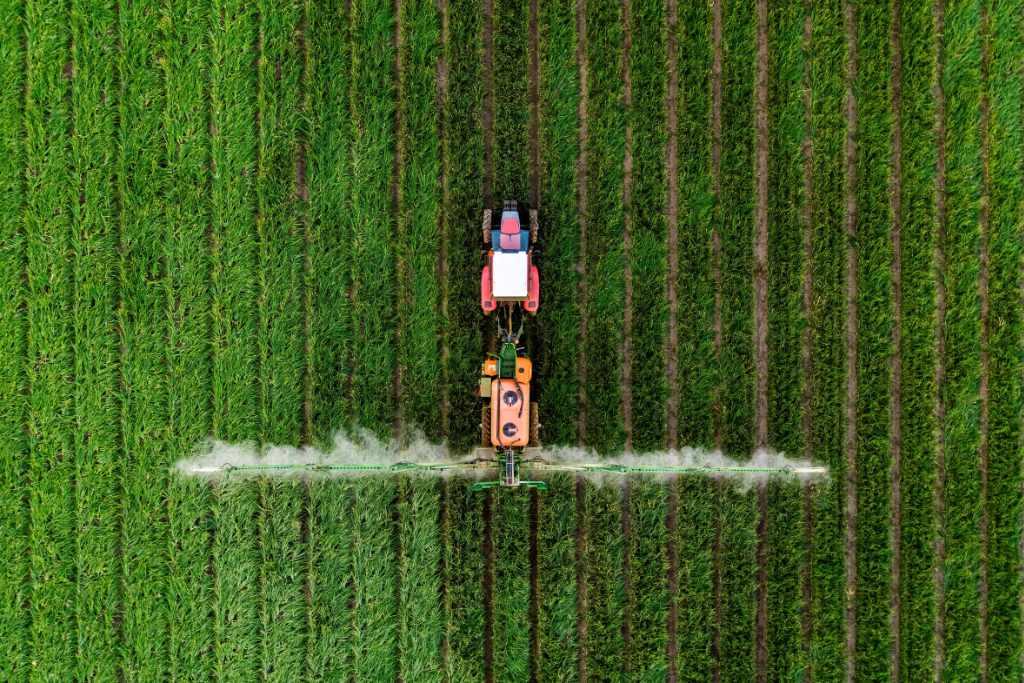
With crop crop protection, we need 40% less agricultural land to achieve the same yield. By keeping plants healthy, we can produce more food on the same surface. This way we can preserve more land for nature, contributing to a lower ecological footprint of agriculture and supporting biodiversity and natural ecosystems.
Sustainability is one of the guiding principles in Globachem’s long-term strategy. As a family-owned company, our mission is clear: to help feed the world’s growing population with safe food and bio-based raw materials, while respecting the planet’s natural resources. Guided by our FRAMILY values, we are committed to building a future where agriculture is efficient, sustainable, and respectful of nature.
We create crop protection solutions, both biological and chemical, that are future proof, thoroughly tested and safe for people and the environment. By keeping safety and effectiveness at the core, we reduce our ecological footprint and help build resilient farming systems for today and tomorrow.
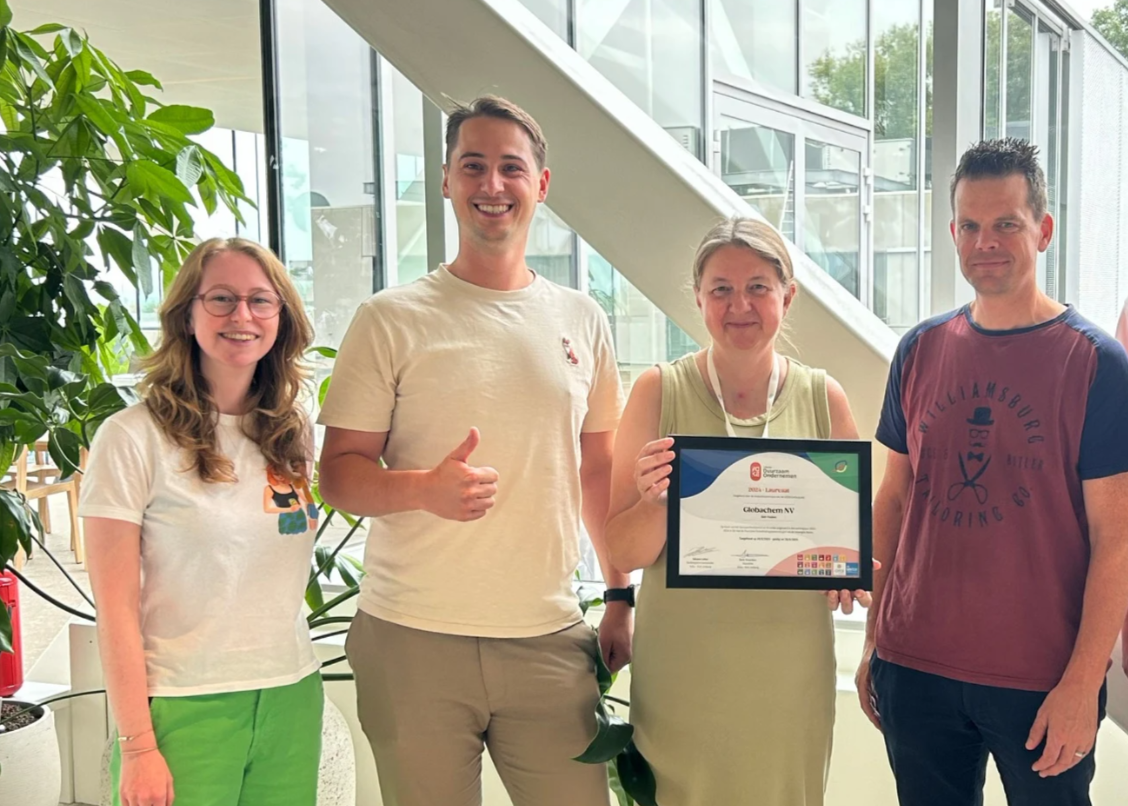
Making our crop protection portfolio more sustainable
Expand and provide more sustainable and bio-based products
We commit to increase the proportion of crop protection products in our portfolio that are of natural origin or demonstrate improved sustainability performance (e.g., reduced residues, lower environmental impact) compared to conventional alternatives, such as our insecticides of natural origin Sankari and Hakuda. To expand our global reach, we also invest in launching products (based on both existing active ingredients as own innovations) into developing countries, as we believe we can have the largest positive impact there.
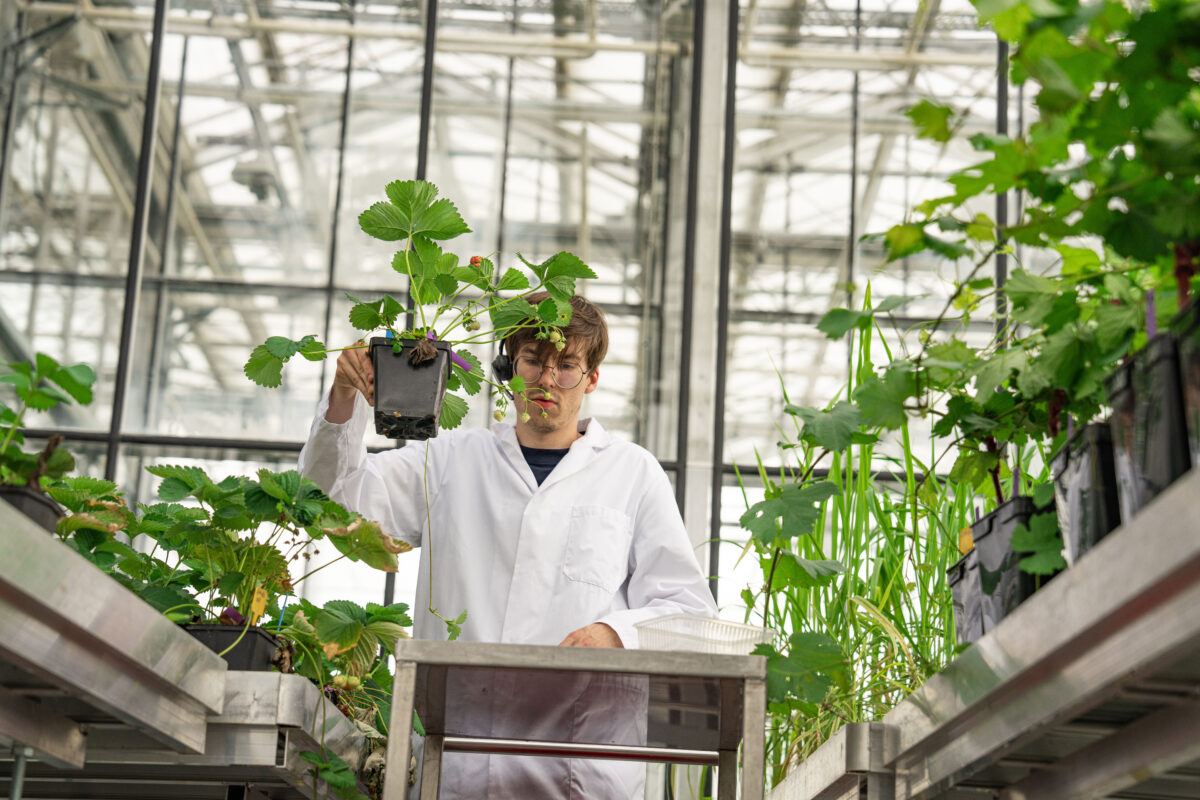
Transform our R&D process
To ensure that our innovations drive our progress toward environmentally friendly products, we aim to dedicate all our early-phase R&D efforts to developing products with improved sustainability performance by 2028¹. We developed an in-house evaluation system to score our research projects on multiple sustainability criteria (Food, Resource Use, Climate Change, Environmental impact, Health and Safety, Contribution to profitable growth). Additionally, we actively work on registering our own innovations developed by our R&D team.
A specific example is our product Flurostar Forte (400). A powerful alternative to its predecessor Flurostar 200. Thanks to the doubled concentration of the active ingredient Fluroxypyr, it offers the same effect in the field, but with significantly less impact on the environment. By doubling the concentration, we achieve lower emissions during formulation, less use of solvents, less transport and less packaging material.
Rethinking our formulations
But what about our existing products and formulas? To further reduce our environmental impact, our formulas need some improving too. By 2030, we aim to have at least 60% of co-formulants in our registered product portfolio classified as ‘preferred’ (Based on our in-house developed scoring system).²
Striving for the highest standards in quality & safety
Customer satisfaction
Quality and safety are at the core of what we do. We have set ourselves the ambition to have zero³ complaints on product quality. Achieving this requires ongoing improvements to our quality control systems and continued investment in training our employees.
Safety in the workplace
At Globachem, we recognize that our people are essential to our success. That’s why we are striving for zero workplace accidents, through stricter safety protocols, regular audits, and continuous awareness programs.

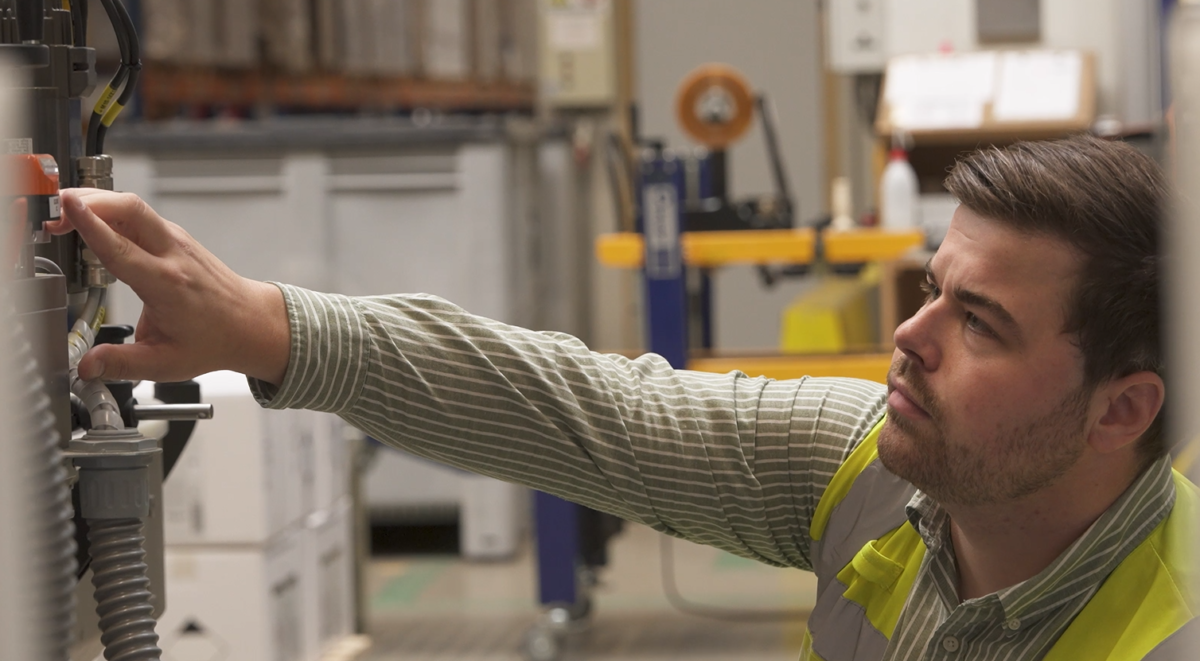
Taking responsibility for our carbon footprint and supply chain
Carbon footprint
Another aspect we’re tackling is our carbon footprint. We do this by striving to significantly reduce our greenhouse gas emissions. We aim for two goals by 2030. To achieve carbon neutrality for our own operations (scope 1 and 2) and to reduce the emission intensity of our supply chain (scope 3) by 25% as well, compared to our 2022 baseline. We intend to achieve this through a combination of energy efficiency improvements, increased use of renewable energy, optimized logistics and incorporating sustainability requirements in procurement.
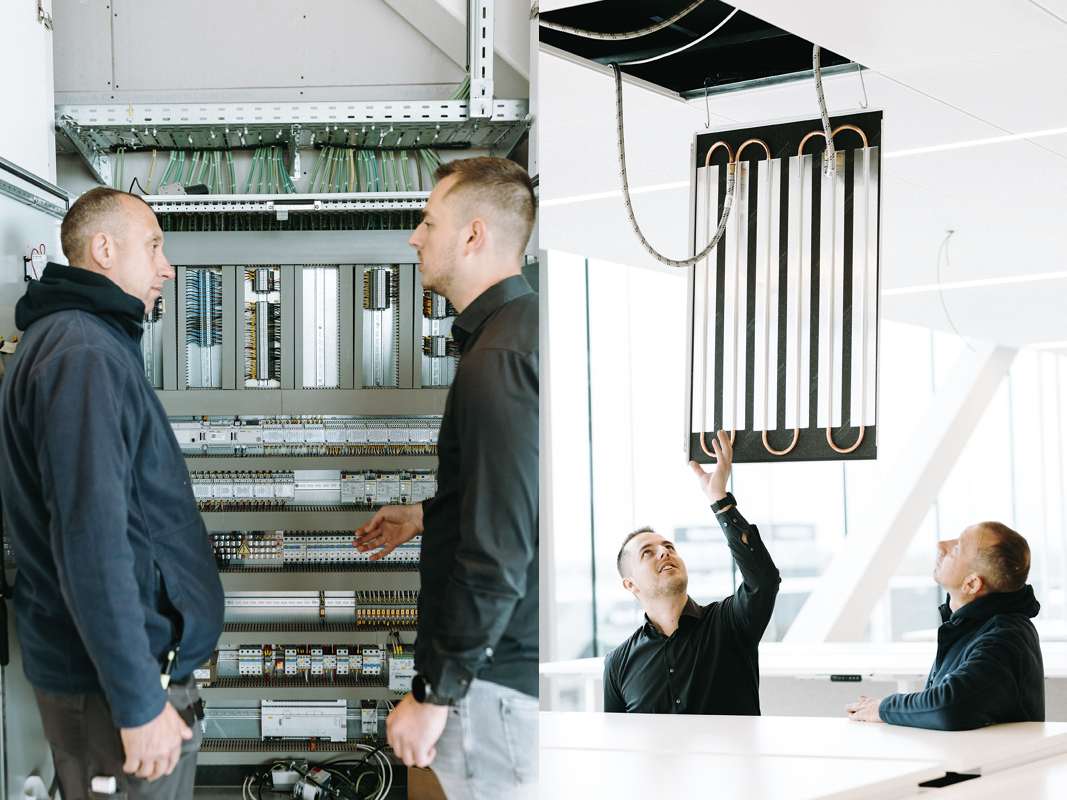
In 2024, we expanded our headquarters with a new building constructed around our existing location. This extension is heated with a sustainable system of climate ceilings, powered by geothermal energy. A heat pump extracts warmth from the ground, while solar panels provide the necessary electricity. This way we heat our building without fossil fuels and actively reduce our CO₂ emissions.

Supply chain
Sustainability is also about how we source materials and how we work with partners. As a first step we have developed a supplier code of conduct, that we want to have signed by all our product suppliers by 2026-2027. Looking further ahead, we aspire to evaluate all of our product suppliers by 2030 against our supplier sustainability framework, covering different environmental, social and governance-related topics. This way, we wish to ensure that ethical, environmental, and social responsibility standards are met across our whole supply chain.
In addition, we have developed a product stewardship program to promote the safe and responsible use of our products, intending to ensure that farmers and end-users receive the necessary guidance to minimise risks and maximize efficiency.
Disclaimers
¹ Our commitment refers to the evaluation of early-phase R&D projects under our sustainability scoring framework, which includes criteria such as Food, Resource Use, Climate Change, Environmental Impact, Health & Safety, and Contribution to Profitable Growth. This framework is internally developed, continuously updated in line with scientific and regulatory developments, and may be subject to external review. The statement represents our current ambition and is not a legally binding guarantee.
² Preferred refers to classification under Globachem’s internal sustainability scoring framework, which evaluates co-formulants on environmental, health, and safety criteria. It ranks co-formulants in 4 criteria: Phase-out, Transition, Moderate, and Preferred. The methodology will be made available upon request and updated in line with evolving EU standards, and progress will be independently reviewed where applicable. This is a forward-looking ambition and not a guarantee of future performance.
³ We strive to achieve a 6-sigma level meaning maximum 3.4 deficiencies per million opportunities.